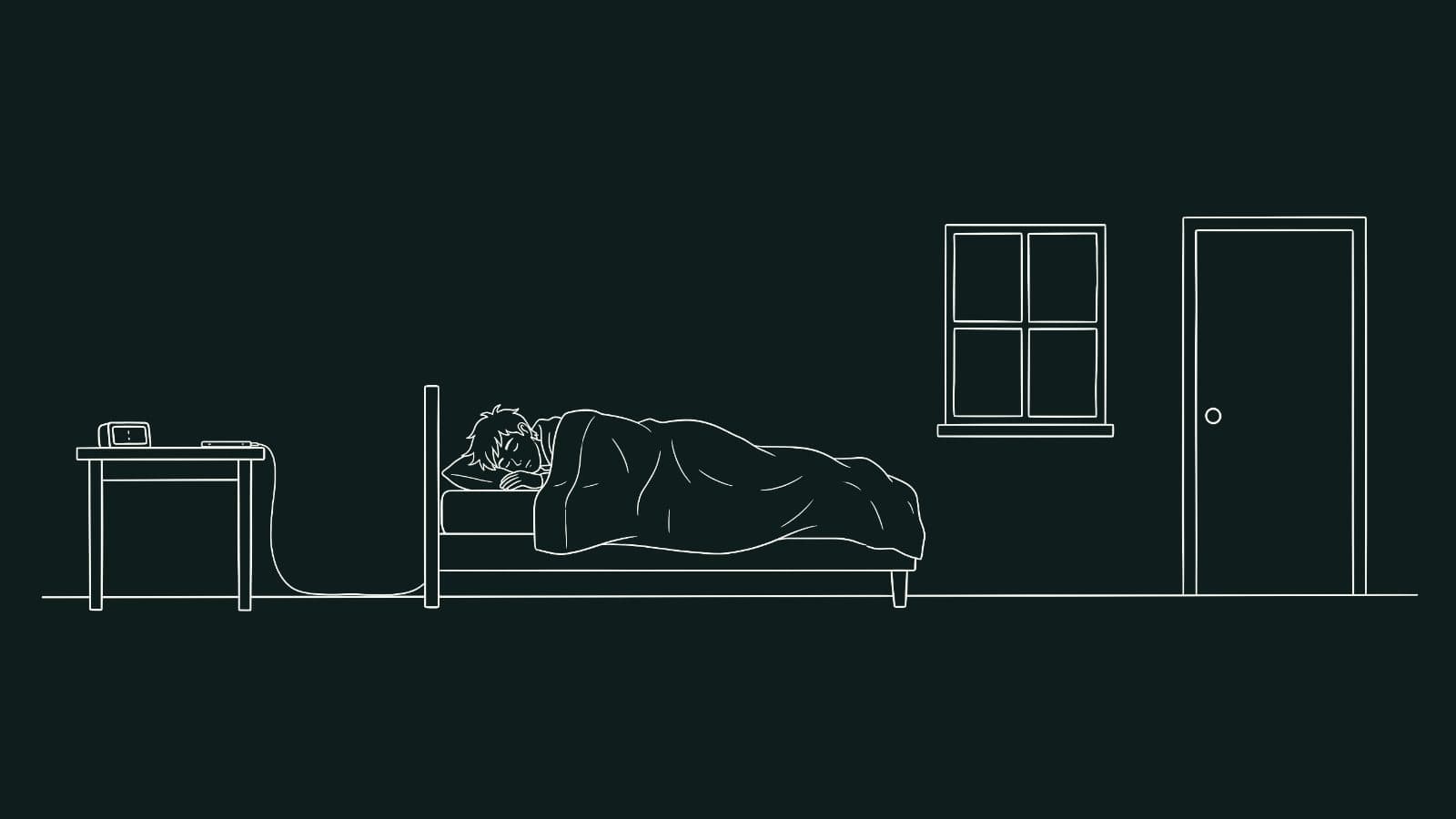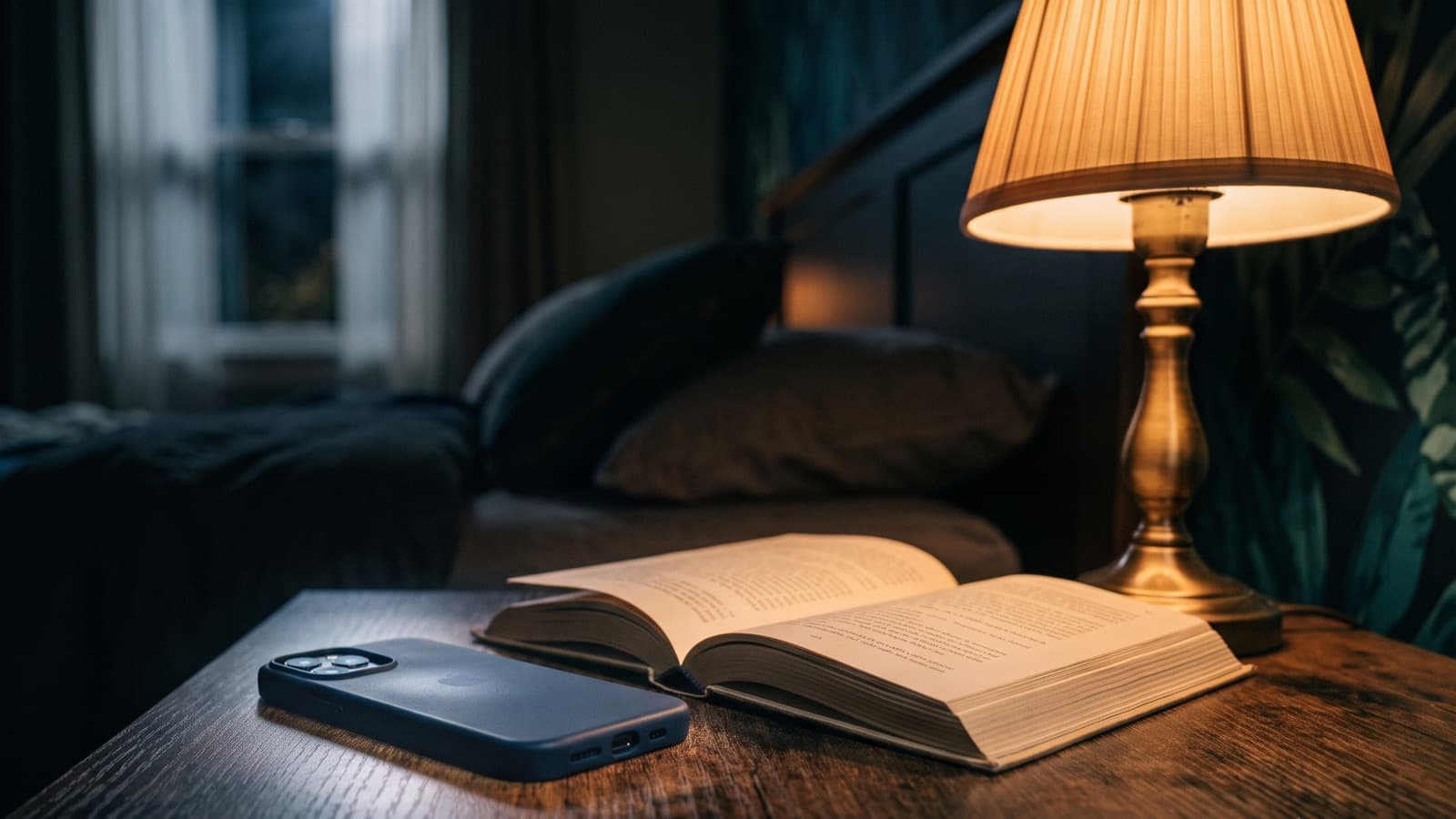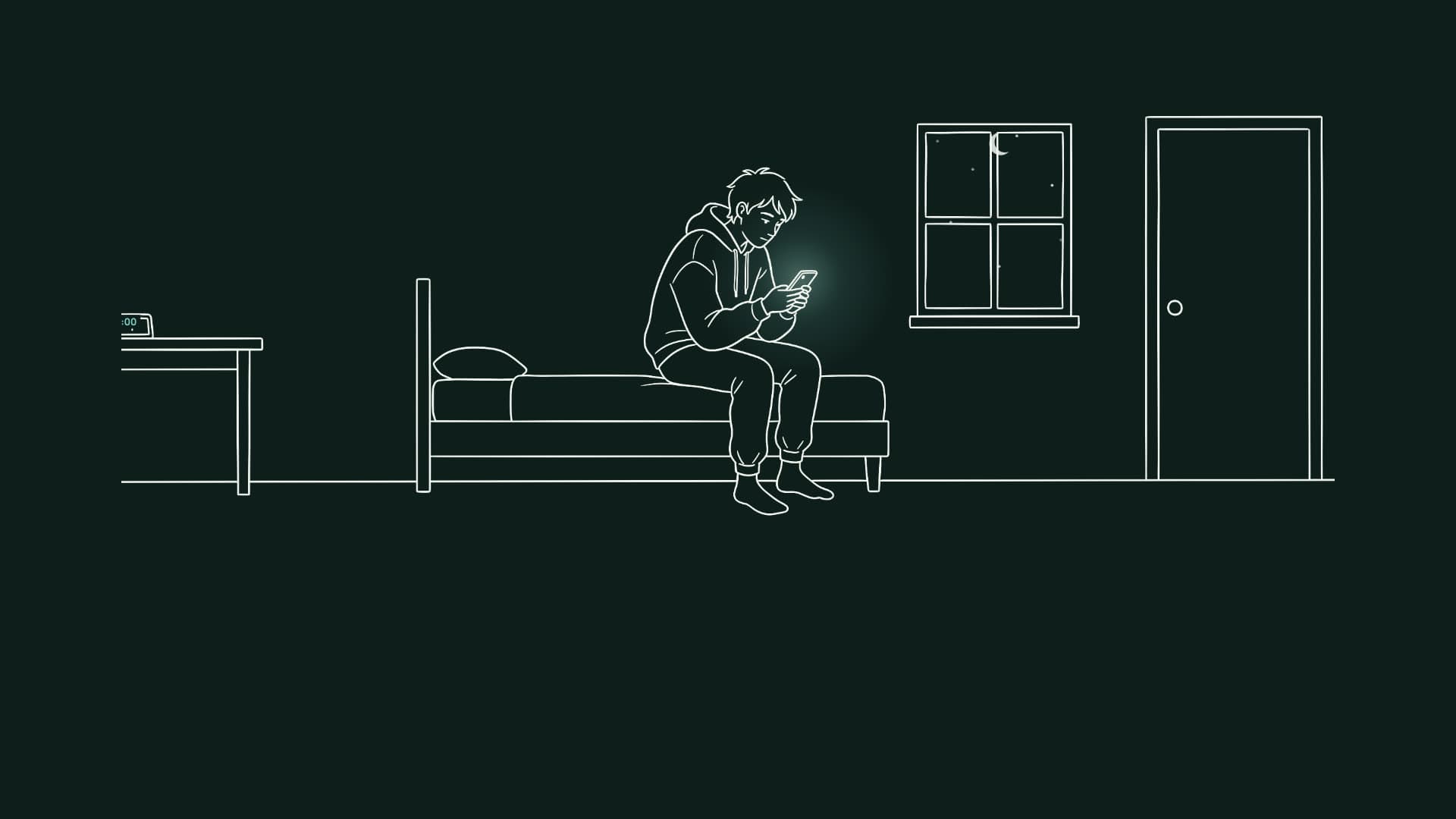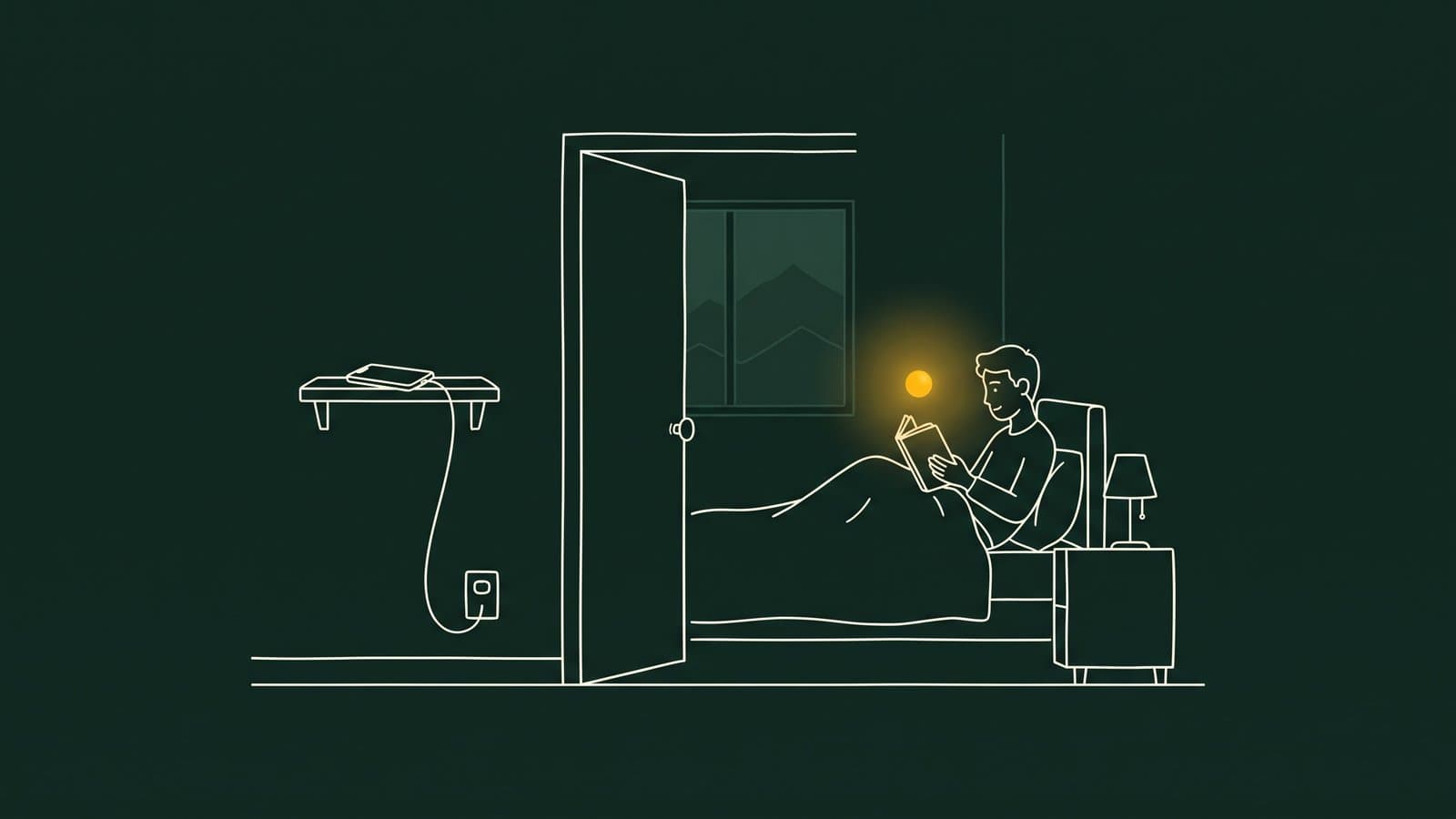
The short version: To stop watching porn, change your setup before you lean on willpower. Find the hours it usually happens. Make those hours harder to slide into, like charging your phone outside the bedroom. Then fill them with something you'd rather be doing. Expect a slip or two, and look at what came right before each one.
We analyzed 12,445 posts from people trying to quit porn on Reddit. They were written between October 2025 and October 2026.
170 of them named a time of day. About half of those times were between 10pm and 4am, and the most common hour was 3am.
That tells you something useful. Porn usually isn't a problem all day long. It's a problem for a few hours, so that's where this guide starts.
Why is it so hard to stop watching porn?
Because it's a habit, and habits don't wait for you to decide.
A habit starts with a cue. A cue is whatever sets it off, like lying in bed with your phone at midnight. Do the same thing in the same place enough times, and your brain starts doing it for you.
That's why "I just won't" stops working by about 11pm.
Most of the time, it isn't really about porn. It's about what porn does for you in that moment. It fills a boring hour, or takes the edge off a lonely night.
In the posts we analyzed, loneliness came up more than any other feeling.
Of course, wanting to stop matters. It does. But wanting is weakest when you're tired, and that's exactly when the habit shows up.
So this plan doesn't ask you for more willpower. It changes the setup, so you need less of it.
Step 1: How do you find your risky hours?
Keep a simple log for one week. Every time you feel the pull, write it down in the notes app on your phone. You don't have to stop yet. You're only noticing.
Write down when it happened and where you were. Add how you felt in one word, like bored or lonely.
By the weekend, you'll probably see a pattern. For a lot of people it's late at night, in bed with a phone. For others it's the hour after getting home, or a Sunday with nothing planned.
Those are your hours. The rest of this plan is about them.
Step 2: How do you make those hours harder?
Most slips aren't really decisions. They happen because the phone is right there and nothing is in the way. So put something in the way.
- Charge your phone outside your bedroom. Buy a cheap alarm clock so you don't need the phone in the morning.
- Leave your laptop in another room at night.
- Turn on your phone's own adult filter. On iPhone, go to Settings > Screen Time > Content & Privacy Restrictions, then App Store, Media, Web, & Games > Web Content > Limit Adult Websites. On Android, go to Settings > Network & internet > Private DNS and enter
family.cloudflare-dns.com. Our iPhone and Android guides walk you through it. - Let someone you trust set the passcode. A passcode you set yourself is easy to undo at 1am.
- Pause the apps that usually start it. In the posts we analyzed, 12.4% of relapses started with social apps or softer content, not porn sites.
None of this is perfect. You can always walk to the other room. But a few steps and a few seconds are often enough for the urge to pass.
Step 3: What should you do with those hours instead?
Fill them with one small thing you'd rather be doing. If you take something away and leave a gap, the gap tends to fill itself with the old habit.
When people in those posts talked about what helped, they mentioned hobbies and exercise about twice as often as blockers. So pick one thing you've meant to do for ages. Maybe it's guitar, or learning to cook a proper dinner.
Make it small enough that you can't really say no. Five minutes of guitar counts. Ten push-ups count.
Then tie it to a time and a place with an if-then plan. For example: if it's 11pm and I'm in bed with my phone, then the phone goes on the desk and I read.
It sounds too simple to work. But if-then plans are one of the most tested ideas in habit research. A 2025 review of 642 tests found that they help people actually do what they planned.
Step 4: What do you do when an urge hits?
An urge feels like it'll keep growing until you give in. It won't. It peaks and then fades, often within half an hour.
You can get through one with something called urge surfing:
- Get up and go to a different room.
- Notice where you feel the urge in your body. Maybe it's your chest or your stomach.
- Give it a number from 1 to 10.
- Breathe slowly, and check the number again every few minutes.
Most of the time, the number drops faster than you'd expect. We made a guided version you can listen to while you do it.
There's research behind this. In one study, college students who smoked learned a short version of urge surfing. Their urges didn't go away, but they smoked fewer cigarettes afterwards.
Step 5: What if you slip?
Write down the time, and what you were feeling right before. Then change one thing for next time. Maybe the phone leaves the room an hour earlier.
A slip doesn't wipe out what you've done. It's information. And it's normal, especially early on. In the posts we analyzed, 44% of relapses came within the first week.
What doesn't help is a long night of beating yourself up. Shame tends to make the next slip more likely. If it's been a hard night, read what to do after a slip.
How long does it take to stop watching porn?
Expect the first week to be the hardest, especially at night.
After that, the new setup slowly stops feeling like a rule. In one well-known habit study, a new habit took about 66 days to feel automatic for the typical person. For some people it took 18 days, and for others it took 254.
So don't count days. Notice what you did instead, like the twenty minutes you read before bed or the walk after dinner.
When should you talk to someone?
If porn is getting in the way of your work or your relationships, talk to a doctor or a therapist. Look for one who works with compulsive sexual behaviour. A guide or an app isn't enough for everyone, and that's fine.
And if you ever feel unsafe, our support page lists helplines you can call tonight.
How Sherpa helps
We built Sherpa around this plan. You tell it something you want to get better at. It turns that into small daily steps, each with a set time and place.
At 9:30 at night it nudges you to switch on your night Shield, which pauses the apps you've chosen. And a bad night earns the same points as a good one, so a slip doesn't take your progress away.
It doesn't do the work for you. It just makes the setup easier to keep up. You can get Sherpa here.
How we did this
- The sample: 12,445 r/pornfree posts from October 2025 to October 2026, from the Arctic Shift research archive of Reddit.
- How we counted: with plain keyword patterns, after dropping anything that looked written by someone under 18. The time-of-day figures come from the 170 posts that named a clock time.
- What we published: counts only. The full method is in Why I'm building a quit porn app.
Questions people ask
Is it normal to find it hard to stop watching porn?
Yes. In the posts we analyzed, people had been trying for a median of 10 years. Finding it hard says more about how habits work than about you.
Do porn blockers work?
Yes, but mostly by slowing you down. They're easy to switch off, and they leave the hours empty. Use one for your risky hours, and fill those hours with something else.
Can you stop watching porn without willpower?
Mostly, yes. You'll still need a little, but a lot less. A plan you make in advance, like an if-then plan, does much of the work willpower usually does.
Should I quit cold turkey or cut down?
Either can work, but many people find a clear rule easier to keep than "just a little", because "a little" is hard to judge at midnight.
Sources
- Sherpa analysis of r/pornfree (Arctic Shift archive), October 2026
- Lally, P. et al. (2010), How are habits formed: modelling habit formation in the real world, European Journal of Social Psychology (DOI)
- Wood, W. & Rünger, D. (2016), Psychology of habit, Annual Review of Psychology (DOI)
- Sheeran, Listrom & Gollwitzer (2025), The when and how of planning: meta-analysis of the scope and components of implementation intentions in 642 tests, European Review of Social Psychology (record)
- Bowen, S. & Marlatt, A. (2009), Surfing the urge: brief mindfulness-based intervention for college student smokers, Psychology of Addictive Behaviors (DOI)
What changed on this post
- : First published.